Chasing Golden Light: Where Nature Paints the Perfect Shot in Pretoria
Have you ever stood somewhere so breathtaking it made your camera feel like an extension of your soul? Pretoria, draped in wild blooms and bathed in soft African light, turns every shutter click into magic. I’m not exaggerating—this city’s natural landscapes don’t just impress, they move you. From misty highveld mornings to golden-hour glows over lush valleys, Pretoria offers photographers a living canvas. Let me show you where nature and lens meet in perfect harmony. This is not about capturing postcard scenes for likes; it’s about finding stillness, witnessing transformation, and returning home with images that carry the breath of a place. Whether you're a seasoned photographer or an enthusiast with a smartphone, Pretoria invites you to see beauty not as decoration, but as dialogue.
The Allure of Pretoria’s Natural Canvas
Pretoria is far more than an administrative capital—it’s a city embraced by nature. Nestled in the highveld region of South Africa, it enjoys crisp air, dramatic seasonal shifts, and an abundance of indigenous flora. What makes it a dream for photographers is how effortlessly beauty appears: jacaranda trees lining quiet streets, sunrises that set the hills on fire, and wildlife just a short drive away. Unlike crowded tourist hubs, Pretoria offers authentic, uncrowded scenes where light and landscape align perfectly. This isn’t about posed shots—it’s about capturing moments that feel alive, where the wind stirs the grass just as the sun breaks the horizon.
The city’s geography plays a crucial role in its visual appeal. Sitting at an elevation of about 1,300 meters above sea level, Pretoria benefits from clear atmospheric conditions and strong natural light, especially in the early hours. The highveld climate produces distinct seasons, each bringing its own palette and mood. Spring paints the city in vibrant purples and pinks, while winter introduces soft golden tones and long shadows. These natural rhythms provide photographers with a dynamic range of conditions to explore. There's no need to chase exotic destinations when such rich variety unfolds in one accessible urban environment.
What sets Pretoria apart is its seamless blend of urban life and untouched nature. You can walk through a quiet neighborhood and suddenly find yourself surrounded by warblers flitting through blooming aloes. Or drive just twenty minutes from the city center and stand at the edge of a nature reserve where zebra graze against a backdrop of distant ridges. This proximity allows for spontaneous photography—no elaborate planning required. It's a place where inspiration doesn’t demand sacrifice; it simply waits, quietly, around the next bend.
Best Seasons for Photography: Timing Is Everything
Photography in Pretoria changes with the seasons, and knowing when to visit is key. The famous jacaranda bloom in late October to early November transforms the city into a purple haze—ideal for street and urban nature photography. During this time, entire avenues glow under canopies of lavender blossoms, creating dreamlike tunnels of color. Early morning walks through suburbs like Brooklyn or Hatfield offer soft, diffused light that enhances the delicate hues of falling petals. It’s a fleeting spectacle—lasting only two to three weeks—but one that draws photographers from across the country.
Winter, from May to August, brings clear skies and soft, low-angle sunlight, perfect for long-exposure landscape shots. The air is crisp, visibility is high, and the sun casts long shadows that emphasize texture and form. This is the best time to photograph grasslands, rocky outcrops, and tree silhouettes against dramatic skies. Frost-covered mornings add an extra layer of visual interest, especially in reserves like Rietvlei, where mist rises off the water and sunlight cuts through like a blade. The cooler temperatures also make early morning hikes more comfortable, increasing your chances of capturing wildlife in natural behavior.
Spring offers dynamic contrasts: wildflowers burst across grasslands while morning mists linger in the valleys. This season is ideal for macro photography—close-ups of dew on spiderwebs, intricate patterns on butterfly wings, or the delicate structure of indigenous proteas. The light during spring is vibrant yet balanced, making color accuracy easier to achieve. Summer, though hot and rainy, delivers dramatic storm clouds and golden-hour intensity. Thunderstorms roll in quickly, offering powerful compositions with dark skies and sudden shafts of light. While humidity can affect lens clarity, the payoff in atmospheric images is well worth the extra care.
Iconic Spots That Demand a Second Look
Start with Freedom Park, a cultural and natural landmark carved into the hillside. Its sweeping lawns, indigenous gardens, and panoramic views make it ideal for wide-angle and silhouette photography. At sunrise, the granite structures glow in warm amber light, while the surrounding valley remains wrapped in mist. The park’s design honors memory and heritage, but its open spaces and thoughtful landscaping also create compelling visual lines. Photographers can use the pathways and terraces to guide the viewer’s eye through the frame, creating depth and narrative.
Nearby, the University of Pretoria’s main campus becomes a natural stage during jacaranda season, with tree-lined avenues creating purple tunnels of light. These pathways, especially along Lynnwood Road, are iconic for a reason—they offer symmetry, repetition, and a sense of journey. Shooting from a low angle or using a drone (where permitted) can emphasize the immersive quality of these floral corridors. Even outside bloom season, the campus retains visual interest with its mix of modern and traditional architecture surrounded by mature trees and open lawns.
Don’t overlook Apies River Trail, where urban nature thrives—herons, kingfishers, and reed beds offer quiet, intimate compositions. This green corridor runs through the heart of the city, yet feels worlds away from traffic and noise. Early risers are rewarded with reflections on still water, birds in flight, and the gentle movement of reeds in the breeze. The trail is accessible and safe, making it a favorite among local photographers who value consistency and familiarity. These aren’t just locations—they’re visual stories waiting to unfold, each visit revealing something new.
Hidden Gems Beyond the Guidebooks
Venture beyond the city center to find Rietvlei Nature Reserve, a haven for wildlife and landscape photographers. At dawn, antelope move silently through the grass, backlit by rising sun—pure magic through a telephoto lens. The reserve spans over 4,000 hectares and includes grasslands, wetlands, and small woodlands, offering diverse ecosystems within a short distance. Species such as blesbok, red hartebeest, and grey duiker are commonly seen, often in natural groupings that create compelling wildlife portraits.
Wonderboom Nature Reserve, centered around a massive fig tree colony, offers surreal textures and ancient tree forms rarely seen elsewhere. The main boom tree is estimated to be over 1,000 years old and spreads across several hectares through clonal growth—a single organism with multiple trunks. This creates otherworldly patterns of shade and light, perfect for abstract and architectural photography. The surrounding area includes walking trails, picnic spots, and views of the Apies River, making it a peaceful destination for a full day of exploration.
Even lesser-known greenbelts like Pienaar Dam or Hartbeespoort Dam viewpoints provide serene water reflections and mountain backdrops. These off-the-beaten-path sites reward patience with unmatched authenticity. Pienaar Dam, located just outside Pretoria, is surrounded by open savanna and offers excellent opportunities for sunset shots with waterfowl in the foreground. Hartbeespoort, a bit farther north, features dramatic cliffs and winding waterways, ideal for aerial photography or long exposures of calm water. These locations are less frequented, allowing for uninterrupted focus and a deeper connection with the environment.
Mastering Light and Composition in the Highveld
The highveld’s elevation means intense sunlight and fast-changing conditions—challenges that also create opportunity. Early mornings offer soft, diffused light that enhances textures in grasslands and bark. This is the golden window for photography, when shadows are long but not harsh, and colors appear most natural. Arriving before sunrise allows you to set up in position and observe how light gradually transforms the landscape. Many of the most powerful images are taken within the first 30 minutes after the sun clears the horizon.
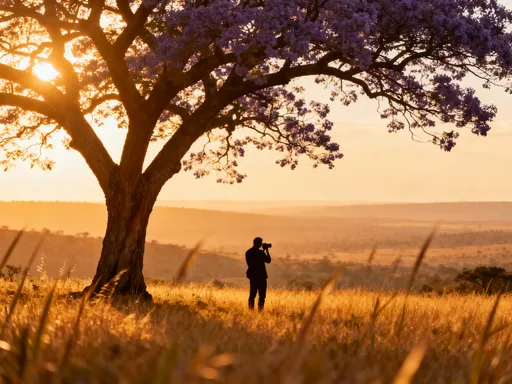
Golden hour stretches longer here, painting valleys in warm amber. The flat to gently rolling terrain of the highveld allows for expansive compositions, where the sky often occupies half the frame. Use this to your advantage by including cloud formations, fading twilight colors, or silhouetted tree lines. The absence of dense forests means fewer obstructions, giving you clear sightlines across vast distances. This openness encourages wide-angle shooting, but don’t neglect the details—a single acacia tree against a gradient sky can be just as compelling as a panoramic view.
Shoot wide to emphasize sky-to-land ratios, or zoom in on shadows to create depth. Polarizing filters help manage glare, especially near water or on glossy leaves. They also enhance the saturation of blue skies and green foliage without appearing unnatural. Tripods are essential for maintaining sharpness during low-light conditions, and remote shutters prevent camera shake. Remember: in Pretoria, light isn’t just illumination—it’s a leading actor in every frame. Learning to anticipate its movement—how it wraps around hills, filters through trees, or reflects off water—is the key to creating images that feel alive.
Gear and Practical Tips for the Field
You don’t need the most expensive gear, but preparation matters. A versatile zoom lens (like 24-70mm or 70-200mm) covers most scenarios, from cityscapes to distant wildlife. These lenses allow quick adaptation to changing conditions without the need to swap equipment in dusty or humid environments. For macro work, a dedicated 100mm macro lens can reveal the intricate beauty of flowers, insects, and textures in bark or rock. Mirrorless cameras with good dynamic range perform exceptionally well in the highveld’s contrast-rich light.
A tripod is essential for dawn and dusk shots, especially in reserves where movement is limited. It enables longer exposures, smoother panning for bird-in-flight shots, and consistent framing for time-lapse sequences. Pack light but include extra batteries—remote locations mean no power access. Cold winter mornings drain battery life faster, so keep spares warm in an inside pocket. Memory cards should have ample storage, particularly if shooting in RAW format, which preserves maximum detail for post-processing.
Dress in neutral colors to blend in, and always respect protected areas. Avoid disturbing wildlife or straying from marked paths. Many reserves have strict rules about noise, drones, and vehicle access—follow them without exception. Carry water, sunscreen, and a hat, even in winter, as the highveld sun remains strong. Most importantly: slow down. Some of the best shots come when you’re not chasing, but waiting. Sit quietly by a waterhole, observe the rhythm of the land, and let the moment reveal itself. Photography here is not a race; it’s a practice of presence.
Why Pretoria Belongs on Every Nature Photographer’s List
In a world of over-photographed destinations, Pretoria stands out for its quiet intensity. It doesn’t shout for attention—it invites you in. Whether you're capturing the delicate fall of a blossom or the silhouette of a kori bustard at dusk, the city offers raw, unfiltered beauty shaped by season, light, and terrain. It’s not just about taking photos—it’s about learning to see nature differently. The act of photographing here becomes a form of mindfulness, a way to slow down and reconnect with the natural world.
Pretoria’s strength lies in its accessibility and diversity. You can spend one morning in a bustling urban park and the next tracking animal tracks in a silent grassland. The city supports both spontaneous outings and planned expeditions, making it ideal for photographers with families, busy schedules, or limited travel budgets. There’s no need for international flights or expensive permits to find inspiration. Beauty is not reserved for the distant or exclusive—it’s woven into the everyday fabric of this place.
Moreover, Pretoria fosters a growing community of nature photographers who share knowledge, organize walks, and advocate for conservation through imagery. Social media groups, local exhibitions, and workshops create opportunities to learn and grow. This sense of shared purpose adds another layer of meaning to the work. Your photographs can do more than decorate a wall—they can raise awareness, inspire care, and contribute to the protection of these fragile ecosystems.
So charge your battery, lace up your boots, and let Pretoria show you what true natural harmony looks like—through your lens. Bring your curiosity, your patience, and your respect for the land. Let the light guide you, the seasons teach you, and the silence speak to you. In Pretoria, every photograph is not just an image, but a moment of connection—a testament to the quiet wonder that still exists when we take the time to look.