You Won’t Believe What I Found at Jerusalem’s Ancient Gates
Walking through Jerusalem feels like stepping into a living story—where stone walls whisper history and every alley hides a secret. I went searching for the city’s iconic landmarks and left with so much more: awe, clarity, and a deep connection to places I’d only read about. From golden domes to ancient gates, Jerusalem’s architecture isn’t just impressive—it’s transformative. Let me take you through the must-see sites that shaped my journey and could redefine yours too.
Entering the Holy City: The Significance of Jerusalem’s Old City Gates
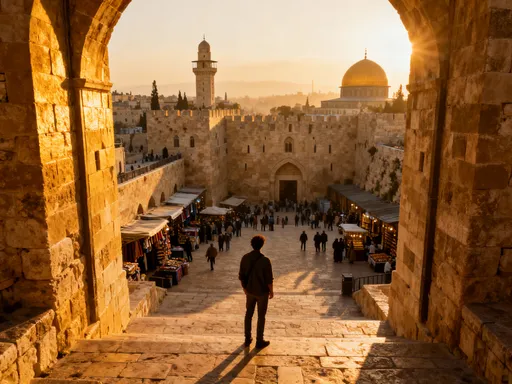
The Old City of Jerusalem is encircled by massive stone walls, built in the 16th century under Ottoman rule, and pierced by seven historic gates—each a portal into a different era and cultural narrative. These gates are not merely entry points; they are living thresholds where daily life, religious tradition, and centuries of history converge. For first-time visitors, choosing the right gate to enter can shape the entire rhythm of their experience. Among them, Jaffa Gate and Damascus Gate stand out as the most accessible and symbolic entrances, offering distinct atmospheres and practical advantages.
Jaffa Gate, located on the western side of the Old City, is the most commonly used entry by tourists. Its arched passageway, framed by weathered limestone, opens onto a wide plaza that serves as a natural orientation point. From here, visitors can easily access major sites like the Tower of David and the Christian and Armenian Quarters. The surrounding area is well-maintained, with clear signage and helpful information kiosks. Security checks are routine but efficient, typically involving bag screening and brief questioning. To avoid crowds, arriving early in the morning—ideally between 7:30 and 8:30 a.m.—ensures a peaceful start. The walk from the nearby parking areas or bus stops is short and well-paved, making it especially suitable for families and older travelers.
In contrast, Damascus Gate, on the northern edge, offers a more vibrant and authentic introduction to Jerusalem. This gate bustles with energy from dawn until late evening, serving as a main thoroughfare for Palestinian residents, street vendors, and shoppers in the adjacent Arab market. The moment you step through its wide arch, you are immersed in the pulse of daily life—vendors calling out prices for spices and textiles, children rushing to school, and the scent of freshly baked bread wafting from nearby ovens. While the sensory overload can be intense, it is also deeply rewarding for those seeking a genuine connection to the city’s present-day fabric. However, due to higher foot traffic, visitors should remain mindful of their belongings and be prepared for longer security lines during peak hours.
Each gate carries its own historical weight. For example, Zion Gate, though less frequented by tourists, is notable for bullet marks from the 1948 conflict, a subtle reminder of the city’s complex modern history. Herod’s Gate and the Lions’ Gate also offer quieter access points, particularly for those heading toward the Muslim Quarter or the Via Dolorosa. Regardless of which gate you choose, the act of passing through these ancient archways is more than a physical transition—it is a symbolic crossing into a space where time seems to fold in on itself. The stones, worn smooth by centuries of footsteps, invite reflection and presence. By beginning your visit with intention—choosing your gate thoughtfully and moving with awareness—you set the tone for a journey that is not only sightseeing but soul-stirring.
The Western Wall: Where History Meets Devotion
At the heart of Jerusalem’s spiritual landscape lies the Western Wall, a remnant of the retaining wall that once surrounded the Second Temple, destroyed by the Romans in 70 CE. As the closest accessible site to the Temple’s original location, it has become the most sacred prayer site in Judaism. Standing before its massive, honey-colored stones—some weighing over 500 tons—evokes a profound sense of continuity. Generations of Jews have come here to mourn, celebrate, and pray, leaving behind a collective echo of hope and resilience. Today, the Western Wall remains a living altar of faith, where personal supplications are pressed into its crevices in the form of handwritten notes.
The atmosphere at the Western Wall plaza is one of quiet intensity. Men and women pray in separate sections, divided by a modest partition, in accordance with Orthodox Jewish tradition. Visitors are expected to dress respectfully: shoulders should be covered, and men are required to wear a head covering, which is provided at the entrance if needed. The practice of placing a note into the Wall’s cracks is deeply symbolic—many believe that prayers inserted here are carried directly to heaven. Children often watch in awe as their parents or grandparents pause in silent prayer, eyes closed, hands pressed against the ancient stone. It is not uncommon to witness emotional moments: a woman weeping quietly, a man swaying in devotion, or a family gathered around a bar mitzvah boy reading from the Torah.
For non-Jewish visitors, the experience is equally moving, even without religious affiliation. The weight of history is palpable—the Wall has survived earthquakes, wars, and centuries of exile, yet it stands firm, a testament to endurance. To fully appreciate its significance, it helps to understand its context: the Temple Mount above was the center of Jewish worship for centuries, and the Western Wall is the last remaining physical link to that sanctity. While photography is permitted in the plaza, it is customary to refrain from taking pictures during prayer services, especially on the Sabbath or Jewish holidays.
To avoid the busiest times, plan your visit for late morning on a weekday or early afternoon outside of major holidays. Early risers may catch the soft light of dawn illuminating the stones, creating a serene and almost sacred glow. Nearby, the Western Wall Tunnels offer an extended view of the Wall’s underground length, revealing engineering marvels from the Second Temple period. These guided tours provide deeper historical insight and are especially recommended for those interested in archaeology. Whether you come to pray, reflect, or simply witness, the Western Wall offers a rare opportunity to touch a place where history, faith, and human emotion are inseparable.
Dome of the Rock: A Golden Vision on the Temple Mount
Rising above the eastern edge of the Old City, the Dome of the Rock is one of Jerusalem’s most iconic landmarks—a shimmering golden dome set against a sky often washed in morning light. Built in the late 7th century under the Umayyad Caliphate, it stands on the Temple Mount, a site sacred to Judaism, Christianity, and Islam. While non-Muslim visitors are not permitted to enter the Dome itself, its exterior presence is breathtaking. The octagonal structure is adorned with intricate blue and gold mosaics, inscribed with verses from the Quran, and crowned by a gilded aluminum dome that catches the sun like a beacon. Its architectural harmony and spiritual gravity make it one of the most photographed and revered monuments in the world.
For Muslims, the Dome of the Rock commemorates the Prophet Muhammad’s Night Journey, during which he is believed to have ascended to heaven from this very spot. The rock at its center is considered the holiest point on the site, known as the Foundation Stone, which in Jewish tradition marks the place of Abraham’s binding of Isaac and the location of the Holy of Holies in the ancient Temple. This overlapping sanctity makes the Temple Mount one of the most spiritually charged locations on Earth. Because of its religious sensitivity, access is strictly regulated. Non-Muslims may visit the compound during designated hours, typically in the morning, but entry is subject to security checks and can be restricted during times of tension.
Even without entering, there are several vantage points that offer stunning views of the Dome. The southern stairs leading up from the Old City provide a classic frontal perspective, especially beautiful at sunrise when the dome glows with golden light. The rooftop terraces of nearby buildings in the Muslim Quarter, such as those near the Chain Gate, offer elevated angles. Another excellent spot is the western end of the Temple Mount platform, where visitors can stand just outside the entrance and take in the full majesty of the structure. These locations allow for respectful observation without crossing religious boundaries.
When viewing the Dome of the Rock, it is important to maintain a tone of reverence. Loud conversations, pointing, or inappropriate photography are discouraged. The site is not a tourist attraction in the conventional sense; it is an active place of worship and deep religious meaning. Many visitors find themselves standing in quiet awe, struck by the beauty and the layers of history embedded in a single structure. The Dome of the Rock does not merely dominate the skyline—it invites contemplation, reminding us that some places transcend time and belief, becoming symbols of unity in their very existence.
Church of the Holy Sepulchre: Walking Through Resurrection Stories
For Christians, few places hold more significance than the Church of the Holy Sepulchre, believed to be the site of Jesus’ crucifixion, burial, and resurrection. Located in the Christian Quarter of the Old City, this vast, dimly lit basilica is a tapestry of faith, architecture, and shared devotion. Its origins trace back to the 4th century, when Emperor Constantine’s mother, Queen Helena, identified the site during her pilgrimage to Jerusalem. Since then, the church has been rebuilt, renovated, and contested, yet it remains the spiritual heart of Christian Jerusalem. Stepping inside is like entering a living cathedral of memory—where flickering candles, wafting incense, and multilingual prayers create an atmosphere thick with reverence.
The church is shared among several Christian denominations, including the Greek Orthodox, Roman Catholic, and Armenian Apostolic Churches, each responsible for specific chapels and rituals. This unique arrangement, known as the “Status Quo,” dates back to the 18th century and governs everything from cleaning schedules to lighting placements. While it ensures peaceful coexistence, it also means the church’s layout can feel labyrinthine. Visitors may find themselves moving from a solemn Greek Orthodox service to a vibrant Armenian chant within moments. The Stone of Anointing, just inside the entrance, is where tradition holds that Jesus’ body was prepared for burial. Pilgrims often kneel here, touching the marble slab with reverence.
The most sacred area is the Edicule, a small structure housing the tomb of Christ. Enclosed within a marble-clad chamber, the tomb is accessible via a narrow doorway, and queues often form, especially in the morning. Inside, the air is cool and still, with a single candle illuminating the burial bench. Many visitors whisper prayers or leave flowers, overwhelmed by the emotional weight of standing where resurrection is believed to have occurred. Above, the Greek Orthodox and Catholic altars compete for space, their ornate icons and chandeliers reflecting centuries of devotion.
Navigating the church requires patience and mindfulness. Crowds can be dense, particularly during Easter or midday services. To fully appreciate the site, arrive early or later in the afternoon when the light filters softly through high windows. Guides are available, but even solo visitors can follow marked stations of the Via Dolorosa, which begin inside the church. The experience is not just visual—it is sensory and spiritual. The scent of myrrh, the sound of hymns in ancient languages, the cool stone underfoot—all contribute to a sense of stepping outside of time. For believers and seekers alike, the Church of the Holy Sepulchre is not just a monument; it is a living testament to hope and renewal.
Tower of David & Citadel Museum: Jerusalem’s Story in Stone
Rising near Jaffa Gate, the Tower of David is not a single tower but a fortress complex that has stood as a guardian of Jerusalem for over 2,000 years. Originally built by Herod the Great as a defensive stronghold, it has been expanded and repurposed by Romans, Byzantines, Crusaders, Mamluks, and Ottomans, each leaving their mark on its walls. Today, it houses the Tower of David Museum, an immersive journey through Jerusalem’s layered history. Unlike traditional museums, this one blends archaeology, multimedia exhibits, and panoramic views to tell the city’s story in a way that is both educational and emotionally resonant.
The museum’s permanent exhibition unfolds across multiple levels, each dedicated to a different era. Visitors walk through reconstructed streets of ancient Jerusalem, view models of the Second Temple, and listen to audio recordings of historical figures. One particularly moving exhibit uses light projections to illustrate the city’s destruction and rebirth over centuries. The narrative does not shy away from complexity—it acknowledges periods of conflict, exile, and coexistence, presenting Jerusalem as a city shaped by many hands and hearts. For families, interactive displays allow children to “dig” for artifacts or dress in period costumes, making history tangible and engaging.
But the true highlight is the citadel’s rooftop. As the sun begins to set, the western walls of the Old City glow in warm hues, and the skyline stretches from the modern skyline of West Jerusalem to the distant hills of Judea. This is one of the best vantage points in the city, offering a sweeping perspective that connects past and present. On summer evenings, the museum hosts a sound-and-light show projected onto the ancient stones. Narrated in multiple languages, it weaves together archaeological facts, personal stories, and poetic reflections, creating a multisensory experience that lingers long after the final note.
Visiting the Tower of David is more than a historical tour—it is a framing device for understanding Jerusalem’s enduring significance. By seeing how empires rose and fell, how faiths intersected, and how people rebuilt again and again, visitors gain context for the sites they’ve seen and those they will explore. The museum does not offer simple answers, but it fosters deep appreciation. Whether you come for the views, the exhibits, or the evening show, the Tower of David offers a moment of clarity in a city where every stone tells a story.
Mount of Olives: Panoramic Vistas and Sacred Grounds
Just east of the Old City, across the Kidron Valley, the Mount of Olives rises as a ridge of profound religious and historical importance. Its name comes from the olive groves that have grown here for millennia, some of the trees believed to be over a thousand years old. For centuries, this mountain has been a place of prayer, prophecy, and burial. It offers one of the most breathtaking panoramic views of Jerusalem, with the golden dome of the Rock, the bell towers of churches, and the ancient walls all visible in a single sweep. But beyond the scenery, the Mount of Olives is a destination of deep spiritual resonance, especially for Christians and Jews.
One of the most popular viewpoints is at Mount Scopus, near the Hebrew University campus. Here, a wide overlook allows visitors to take in the full expanse of the city, particularly stunning at sunrise when the first light bathes the Old City in a soft, golden glow. Photographers often gather early to capture this moment, but even without a camera, the sight is unforgettable. From this vantage, one can trace the path of the Temple Mount, the Dome of the Rock, and the Garden of Gethsemane at the mountain’s base. The contrast between the ancient and the modern—stone walls beside contemporary neighborhoods—speaks to Jerusalem’s timeless yet ever-changing nature.
Descending toward the base of the mount, the Garden of Gethsemane invites quiet reflection. According to the Gospels, this is where Jesus prayed the night before his crucifixion. The gnarled trunks of ancient olive trees, their roots deep in the rocky soil, seem to hold centuries of silence. A simple basilica, the Church of All Nations, stands nearby, its façade adorned with colorful mosaics depicting prayer and sorrow. Inside, dim lighting and subdued tones create an atmosphere of solemnity. Many visitors sit quietly, some praying, others simply absorbing the weight of the moment. The garden itself is peaceful, with stone pathways winding between the trees, offering a rare sense of stillness in a bustling city.
The Mount of Olives is also home to one of Judaism’s most ancient cemeteries, with over 150,000 graves dating back to the time of the First Temple. Jewish tradition holds that the resurrection of the dead will begin here, making burial on its slopes especially desirable. Walking among the tombstones, many weathered and covered in ivy, is a humbling experience. Paths are uneven, so comfortable footwear is essential, especially for those planning to walk the full length from the top to the bottom. Despite the solemnity, the atmosphere is not mournful but reverent—a reminder of life’s continuity. For visitors, the Mount of Olives offers not just views, but perspective: a chance to see Jerusalem not only with the eyes, but with the heart.
Beyond the Icons: Blending Landmarks with Local Life
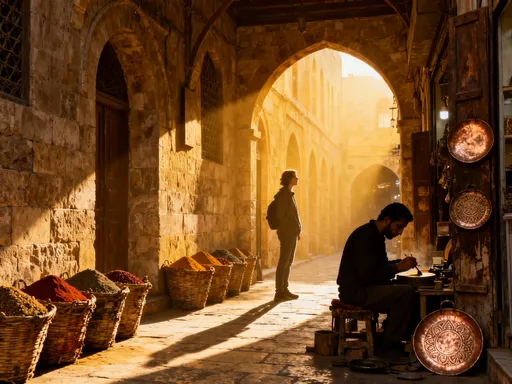
While the great monuments of Jerusalem are undeniably powerful, the city’s true magic often lies in the spaces between them. It is in the quiet moments—a shared cup of mint tea with a shopkeeper in the Muslim Quarter, the sound of church bells mingling with the Islamic call to prayer, or the laughter of children playing near a centuries-old archway—that Jerusalem reveals its living soul. These are not staged experiences; they are the rhythms of a city where history is not preserved behind glass, but woven into everyday life.
One of the most rewarding ways to experience this is by wandering without a strict itinerary. Step off the main paths and explore the narrow alleys behind the bazaars. Pause at a small café where men play backgammon and sip thick Arabic coffee. Watch as a grandmother arranges figs on a wooden stand, or a tailor repairs a robe by hand. These moments of authenticity are not tourist attractions, but glimpses into a community that has thrived here for generations. They remind us that Jerusalem is not a museum piece—it is a home.
Respectful engagement enhances the experience. A simple “Shalom” or “Salaam” can open a conversation. Many locals appreciate genuine curiosity, especially when it comes without intrusion. Buying bread from a neighborhood oven, tasting za’atar on fresh flatbread, or listening to a street musician play a traditional melody—these small acts create connection. They shift the journey from observation to participation.
The landmarks of Jerusalem are not relics frozen in time. They are part of a living, breathing city where past and present coexist. By honoring both—the grandeur of the Western Wall and the warmth of a shared smile—travelers can move beyond sightseeing and into understanding. Jerusalem does not give up its secrets easily, but for those who walk its streets with openness and reverence, it offers something rare: a sense of belonging to something much larger than oneself. In the end, what you find here may not be what you expected—but it will stay with you, long after you’ve left its ancient gates behind.