You Won’t Believe What This Desert Capital Reveals at Sunset
Nouakchott, the quiet capital of Mauritania, isn’t your typical tourist hotspot—but that’s exactly what makes it special. Far from crowded attractions, it offers raw cultural moments most travelers never see. I remember standing on the edge of the Sahara, watching the city fade into golden silence. This is travel at its most authentic: unexpected, unfiltered, and deeply human. Let me show you the Nouakchott only locals know.
Arrival in a City Between Desert and Ocean
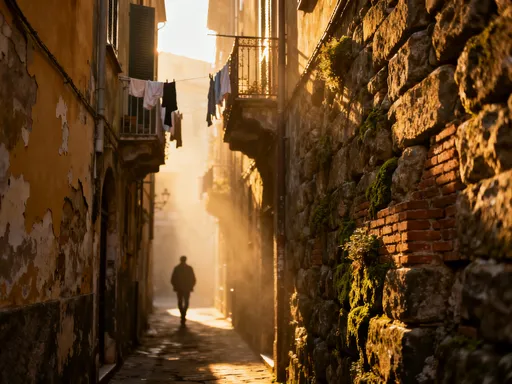
Nouakchott greets visitors with a landscape shaped by elemental forces—endless sand, relentless sun, and the whisper of Atlantic winds. Unlike capitals that burst with neon and noise, this city unfolds slowly, revealing itself in subtle details: the curve of a dune meeting urban edges, the rhythm of donkey carts on unpaved lanes, and the quiet dignity of its people moving through daily life. As the capital of one of the world’s least-visited nations, Nouakchott remains refreshingly untouched by mass tourism. There are no souvenir stalls on every corner, no guided tours shouting through megaphones—just life as it is, lived with resilience and grace.
Geographically, Nouakchott occupies a rare space—where the vast Sahara Desert brushes against the cool expanse of the Atlantic Ocean. This meeting of arid land and maritime climate creates a unique environment, one where dust storms roll in from the east while sea breezes offer relief in the evenings. The city’s layout reflects its origins as a small coastal village, expanded over decades into a capital that still retains a sense of openness. Wide streets, low-rise buildings, and stretches of undeveloped land give it a spacious feel, rare among African capitals. For travelers accustomed to congestion, this breathing room is a gift—an invitation to slow down and observe.
Culturally, Nouakchott is a blend of Moorish traditions and modern West African influences. The majority of the population belongs to the Bidhan (‘White Moors’) and Haratin (‘Black Moors’) communities, with additional ethnic groups including Soninke, Wolof, and Pular. This diversity is evident in language, dress, and daily customs. Women in brightly colored melayahs—traditional wraps—move through markets alongside men in flowing boubous or modern attire. Arabic is the official language, but French, Wolof, and Pulaar are commonly spoken. The city does not impose itself on visitors; rather, it allows you to step gently into its rhythm, offering glimpses of a society rooted in tradition yet navigating change.
First-time travelers often remark on how calm Nouakchott feels. There’s a stillness in the air, especially in the early mornings and late afternoons, when the heat recedes and life resumes. Children walk to school in neat uniforms, elders gather under shade trees, and tea is poured with deliberate care. The pace is unhurried, the atmosphere surprisingly welcoming. Locals may stare at unfamiliar faces, but more out of curiosity than intrusion. A smile, a polite greeting in Arabic—‘Salaam alaikum’—opens doors. This is not a city of grand gestures, but of quiet hospitality, where connection happens in glances, shared silences, and small acts of kindness.
The Grand Mosque: More Than Just Architecture
Rising above the skyline with quiet authority, the Grand Mosque of Nouakchott stands as both a spiritual beacon and a symbol of national identity. Built with Moroccan assistance in the 1980s, its cream-colored minaret and domes reflect the classical Islamic architectural style common across North Africa. But its significance goes far beyond aesthetics. For the people of Nouakchott, the mosque is the heart of communal life—a place of prayer, reflection, and social cohesion. Five times a day, the call to prayer echoes across neighborhoods, marking the rhythm of the city’s soul.
While non-Muslim visitors are not permitted to enter the prayer halls, the exterior grounds offer a profound experience. Standing at the edge of the courtyard, one can observe the steady flow of worshippers—men in white thawbs arriving in groups, removing their sandals before stepping onto the cool tiles. The atmosphere is reverent, yet deeply human. After Friday prayers, the largest weekly gathering, families often linger outside, sharing food and conversation. It’s a reminder that in Islamic culture, the mosque is not only a place of worship but also a center for community life, education, and mutual support.
For visitors, observing the mosque from the outside requires respect and mindfulness. Dressing modestly—covering shoulders and legs—is essential. Women may choose to wear a headscarf as a sign of respect, though it is not strictly required for non-Muslims. Photography should be done discreetly, avoiding images of people in prayer. These small gestures of cultural sensitivity open the door to deeper understanding. The Grand Mosque is not a museum piece; it is a living institution, and its power lies in its ongoing role in the daily lives of the faithful.
What makes the Grand Mosque emblematic of Nouakchott’s identity is its quiet strength. Unlike the grand mosques of Cairo or Istanbul, it does not seek to awe through scale or ornamentation. Instead, it reflects the values of the community: simplicity, devotion, and resilience. In a country where resources are limited and life can be challenging, the mosque stands as a testament to spiritual richness. It reminds visitors that faith here is not performative—it is foundational. To witness prayer time in Nouakchott is to see a society grounded in tradition, drawing strength from its beliefs in the face of adversity.
The Marché Central: A Sensory Journey into Local Life
If the Grand Mosque is the city’s spiritual center, then the Marché Central is its beating heart. Located in the city center, this sprawling marketplace pulses with energy from dawn until dusk. It is a place of commerce, yes, but also of connection—where news is exchanged, friendships are renewed, and culture is lived in full color. For visitors, stepping into the market is an immediate immersion into the sights, sounds, and scents of Nouakchott. The air carries the sharp tang of dried fish, the sweetness of ripe mangoes, and the earthy aroma of cumin and coriander.
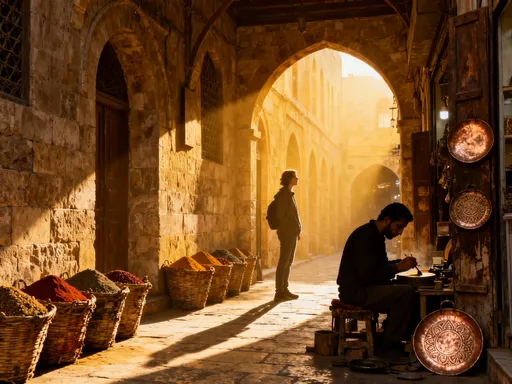
Stalls stretch in every direction, each one a world unto itself. Vendors sit behind pyramids of dates—Mauritania’s golden fruit—some soft and caramel-like, others firm and nutty. Nearby, bolts of handwoven fabric in deep indigo, rust red, and saffron yellow catch the light. These textiles, often made by women in rural communities, are used for melayahs and boubous, and each pattern tells a story of heritage and region. Leather goods—sandals, bags, and belts—are displayed with pride, crafted from locally tanned hides. Spices are sold in open baskets, their vibrant hues a feast for the eyes: turmeric, paprika, ginger, and the prized saffron, carefully measured into small paper cones.
Bargaining is an art form here, conducted with patience and politeness. A vendor might offer a cup of sweet mint tea before discussing price, turning transaction into relationship. The rhythm of negotiation is slow, almost musical—a dance of numbers, smiles, and gentle refusal. It’s not about winning the lowest price, but about mutual respect. When a deal is reached, it’s sealed with a handshake and often a shared laugh. This is commerce as community, where value is measured not only in coins but in connection.
The Marché Central also reflects Mauritania’s ethnic diversity. While Moorish culture dominates, the presence of Soninke, Wolof, and Pular traders adds layers to the experience. You might hear Pulaar spoken among cattle merchants, or see Wolof women selling baskets of okra and tomatoes. The market is a microcosm of the nation—a place where differences coexist in daily practice. For the traveler, it offers an unfiltered look at how people live, work, and support one another. More than just a place to buy souvenirs, it is a classroom of human resilience and ingenuity.
The Seawall at Dusk: Where the City Breathes
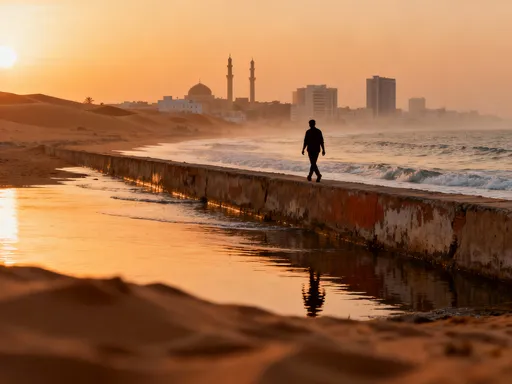
As the sun begins its descent, a quiet transformation takes place along Nouakchott’s Atlantic coast. Families, couples, and friends make their way to the seawall—a simple stretch of concrete that becomes the city’s most beloved gathering place at dusk. This is not a tourist attraction with vendors and music, but a genuine ritual of daily life. As temperatures cool, the city exhales. People walk barefoot on the sand, children chase kites made from plastic bags, and fishermen mend their nets in the fading light.
The Atlantic here is not the turquoise postcard kind. It is wild, gray-green, and powerful, crashing against the shore with a rhythm that feels ancient. But there is beauty in its rawness. As the sun sinks toward the horizon, the sky ignites in hues of amber, rose, and violet. The light spills across the water, turning the waves into molten gold. It is a moment of quiet awe—one that locals seem to cherish without fanfare. They don’t point or photograph; they simply stand, breathe, and absorb.
This evening ritual holds deep cultural significance. In a city where indoor spaces can be hot and crowded, the coast offers relief and openness. It is a place for reflection, for family time, for simply being. Young men gather in groups, talking in low voices. Elderly couples sit on benches, watching the water in comfortable silence. Some come to pray, facing east even as the sun sets in the west—a reminder of spiritual orientation beyond the physical. The seawall is not just a place to see the sunset; it is where the community reconnects with itself and the natural world.
For visitors, joining this ritual requires no invitation—only presence. Sitting quietly on the wall, watching the sky change, is enough. Locals may offer a nod or a soft greeting, but there is no pressure to interact. This is one of the rare places where you can be both insider and observer. The experience is meditative, grounding. In a world that often values constant movement, the seawall teaches the power of stillness. It is here, in these golden minutes, that Nouakchott reveals its quiet poetry—a city that doesn’t shout, but whispers its beauty to those willing to listen.
Art and Heritage at the National Museum
Tucked away in a quiet neighborhood, the National Museum of Mauritania is a modest yet powerful keeper of memory. Housed in a low, sand-colored building, it does not rival the grand museums of Europe or North America in size or resources. But what it lacks in scale, it makes up for in authenticity. Inside, glass cases hold ancient artifacts, handwritten Qur’anic manuscripts, traditional musical instruments, and displays of ceremonial clothing. Each item tells a story of a people shaped by desert, migration, and faith.
The museum’s collection traces the roots of Mauritanian identity through its major ethnic and cultural groups. Exhibits on the Moorish (Bidhan) heritage highlight the role of camel caravans, Islamic scholarship, and nomadic poetry. Berber influences are evident in jewelry and weaving techniques, while West African traditions—particularly from the Soninke and Pular peoples—are showcased through masks, drums, and agricultural tools. One of the most moving displays features a recreated nomadic tent, complete with woven mats, leather pouches, and a small hearth. Standing inside, one can almost hear the wind outside and smell the smoke of a desert fire.
What strikes visitors most is the quiet pride with which the museum is maintained. Staff members, often historians or cultural preservationists, speak with passion about their work, even as they acknowledge the challenges of limited funding and infrastructure. There are no interactive screens or audio guides—just handwritten labels and carefully preserved objects. Yet this simplicity adds to the authenticity. This is history not packaged for tourists, but protected for future generations. The museum does not dramatize the past; it honors it with dignity.
For travelers seeking to understand Mauritania beyond surface impressions, the National Museum is essential. It offers context for the clothes people wear, the music they play, and the values they hold. It reminds us that culture is not static—it is lived, adapted, and passed down. In a country where oral tradition remains strong, the museum serves as a rare written and visual archive. To walk through its halls is to gain a deeper appreciation for the resilience of a people who have thrived in one of the harshest environments on Earth. It is not a flashy destination, but a necessary one—a quiet act of preservation in a world that often forgets.
Hidden Courtyards and Traditional Homes
One of the most intimate glimpses into Nouakchott’s soul comes not from its public spaces, but from the private world of its homes. As you walk through residential neighborhoods, you may notice heavy wooden gates left slightly ajar, revealing flashes of greenery and the sound of water. These are the hidden courtyards—central to traditional Saharan architecture and family life. Inside, families gather under shaded arbors, children play among potted plants, and women prepare meals in open kitchens. The courtyard is not just a design feature; it is a sanctuary.
The architecture of these homes reflects centuries of adaptation to desert life. Thick mud-brick or concrete walls keep interiors cool during the day, while small windows minimize heat gain. The central courtyard allows for airflow and light, creating a microclimate of comfort. Many homes feature a fountain or basin—a symbol of hospitality and a practical source of cooling. In the evenings, families gather here for dinner, storytelling, or tea. The space is both functional and symbolic: a place of privacy, unity, and refuge from the harsh outside world.
Culturally, the courtyard reflects deep values of family, modesty, and hospitality. Guests are welcomed with tea served in three rounds—bitter, sweet, and then sweeter—each representing a stage of friendship. While outsiders are not typically invited inside, the occasional glimpse through an open gate offers a moment of connection. A woman may smile and wave; a child might call out a greeting. These small interactions, though brief, carry warmth. They remind the traveler that authenticity is not always found in grand gestures, but in the quiet moments of daily life.
For visitors, respecting boundaries is key. Peering too closely or attempting to enter without invitation is inappropriate. But standing respectfully at a gate, acknowledging the life within, can be a powerful act of observation. These homes are not performances for tourists—they are lived realities. To appreciate them is to honor the privacy and dignity of the people who live there. In a world where travel often demands access, Nouakchott teaches the value of restraint. Sometimes, the most meaningful experiences come not from entering, but from pausing, waiting, and being allowed a fleeting glimpse into another world.
Why Nouakchott Stays With You
Nouakchott does not dazzle. It does not offer luxury resorts, famous landmarks, or Instagram-famous vistas. And yet, for those who take the time to listen, it leaves an indelible mark. This is the power of slow, meaningful travel—the kind that moves beyond checklists and seeks connection. In Nouakchott, you are not a spectator of culture; you are invited, however briefly, to witness it in its natural rhythm. You see how people pray, trade, walk by the sea, and gather in their courtyards—not for show, but because it is their life.
What makes this city unforgettable is its authenticity. There is no veneer, no performance. The challenges are real—limited infrastructure, economic hardship, environmental pressures—but so is the resilience. People here live with dignity, faith, and a quiet joy that cannot be manufactured. To travel here is to recalibrate your sense of what matters. You begin to value stillness over spectacle, observation over consumption, and presence over possession.
Nouakchott also challenges the notion that only famous destinations are worth visiting. In an age of overtourism, there is profound value in going beyond the usual paths. Places like this remind us that the world is vast, diverse, and full of quiet wonders. They teach humility—that we do not need to change a place to appreciate it, but to understand it on its own terms. Travel becomes not about collecting experiences, but about deepening empathy.
And so, as the sun sets over the Atlantic and the call to prayer drifts through the evening air, Nouakchott reveals its truth: that beauty does not always shout. Sometimes, it whispers. It lives in the rustle of a market cloth, the steam of a tea glass, the silence between waves. To visit is not to conquer or consume, but to listen, observe, and learn. In doing so, we carry a piece of this desert capital with us—not as a souvenir, but as a quiet light in the memory, glowing long after we’ve left.