What I Found in Luanda’s Backstreets Will Change How You See Angolan Food
You know that feeling when you stumble on something no one’s talking about, but it’s absolutely mind-blowing? That’s Luanda’s food scene. Far from the tourist trails, locals are cooking up rich, bold flavors—slow-simmered stews, grilled fish with fiery piripiri, and cassava magic. This isn’t just eating; it’s a deep dive into culture, history, and soul. I went looking for secrets—and found a cuisine that deserves the world’s attention. What I discovered wasn’t hidden in glossy restaurants or curated food tours, but in the rhythm of everyday life: in smoky backstreet kitchens, on roadside grills, and around crowded tables where stories are shared as freely as spoons. This is Angolan food at its most authentic, a reflection of resilience, community, and deep-rooted tradition.
Arrival in Luanda: First Impressions vs. Reality
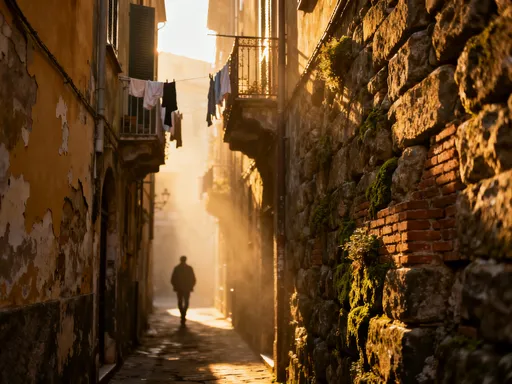
When I first stepped off the plane in Luanda, I carried with me the usual mix of curiosity and caution. The city’s reputation—shaped by decades of civil conflict and media portrayals of struggle—had painted a picture of hardship and stagnation. What I found instead was a capital pulsing with energy, color, and an unmistakable sense of renewal. Skyscrapers rise beside weathered colonial buildings, their balconies draped in laundry and bougainvillea. Traffic hums through wide avenues, while motorbikes weave through side streets carrying everything from furniture to live chickens. The air is thick with humidity and the scent of diesel, but also something more inviting: the smoky aroma of grilled meat, the tang of fermenting palm oil, and the sweet earthiness of roasting cassava.
The real revelation, though, wasn’t in the skyline or the pace of life—it was in the way food seemed to anchor everything. In the morning, women in bright dresses balance trays of steaming cornbread on their heads, calling out to passersby. By midday, the sidewalks fill with the sizzle of street grills and the rhythmic pounding of mortars in backyard kitchens. Dinner, when it comes, is not rushed. It’s gathered around, shared, and savored. This isn’t a city recovering from its past so much as one rebuilding through its culture—and food is at the heart of that rebirth.
Guidebooks, if they mention Luanda at all, often focus on its contrasts: wealth and poverty, modernity and tradition, Portuguese influence and African identity. But these binaries fall short when you’re sitting on a plastic stool, eating grilled sardines wrapped in newspaper, watching children play soccer in the fading light. The truth of Luanda isn’t in its divisions; it’s in its unity, and that unity is most visible at the table. Here, food isn’t a luxury or a trend—it’s a language, spoken in spices, textures, and shared plates.
The Heart of Angolan Cuisine: Staples and Flavors
To understand Angolan food is to understand its land and its history. The cuisine is built on a foundation of humble, resilient ingredients—cassava, corn, beans, plantains, and palm oil—each transformed through time, care, and generations of knowledge. These are not just foods; they are survival, celebration, and identity all at once. At the center of most meals is **funge**, a smooth, dough-like staple made from cassava flour and water, cooked slowly over low heat until it reaches a consistency somewhere between polenta and mashed potatoes. It’s not seasoned, not flashy, but it’s essential—a neutral base that carries the bold flavors of the dishes it accompanies.
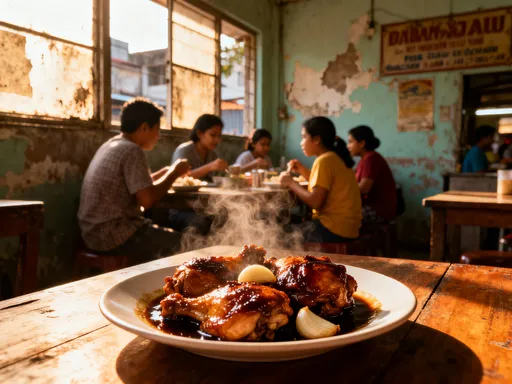
One of the most iconic pairings is **muamba de galinha**, a rich stew of chicken, okra, garlic, and palm oil, slow-cooked until the meat falls off the bone and the sauce clings to every surface. The deep red color comes from the palm oil, which isn’t just a cooking fat—it’s a cultural signature, lending both flavor and vibrancy to the dish. The heat comes not from overwhelming spice, but from gindungo pepper, a local chili with a sharp, clean burn that lingers just long enough to remind you you’re alive. This is food that demands attention, that engages all the senses, and that tells a story with every bite.
Another cornerstone is **calulu**, a dish that varies by region but always centers on dried fish or meat, rehydrated and simmered with tomatoes, onions, and spices until the sauce is thick and deeply savory. It’s often served with rice or funge, and sometimes accompanied by fresh vegetables like spinach or pumpkin leaves. What’s striking about these dishes is not just their flavor, but their role in daily life. Meals are rarely eaten alone. They are **communal** events, where plates are shared, hands are used, and conversation flows as freely as the water or homemade palm wine. This isn’t just about sustenance—it’s about connection.
Angolan cuisine also reflects the country’s complex history. Centuries of Portuguese colonization left a mark, seen in the use of garlic, onions, and tomatoes, as well as in baked goods like broa, a dense cornbread with a golden crust. But the soul of the food remains distinctly African—rooted in the soil, shaped by tradition, and passed down through families. It’s a cuisine of adaptation, born from necessity, refined by time, and sustained by pride.
Hidden Eateries: Where Locals Eat
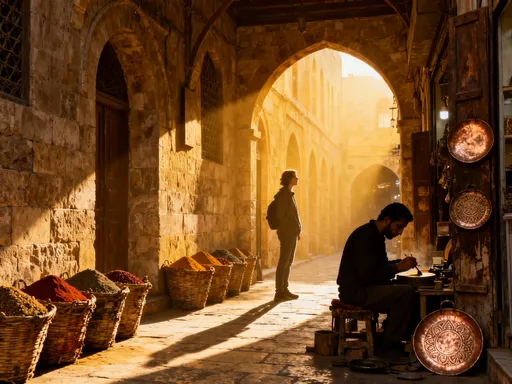
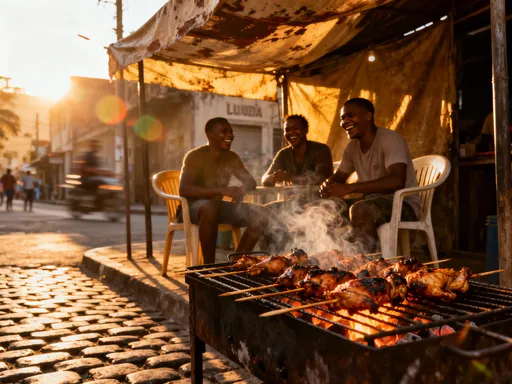
If you want to taste the real Luanda, you don’t go to the hotels or the upscale restaurants with laminated menus in English. You go to the streets. You go to the **chipsami** stands—simple setups where a single vendor grills meat, fries plantains, and assembles meals on paper plates with practiced speed. These aren’t trendy food trucks; they’re institutions, often run by the same family for decades. They pop up in the early evening, their charcoal grills glowing like embers, and disappear by midnight, leaving only the scent of smoke and satisfaction behind.
In neighborhoods like Sambizanga, Maianga, and Viana, these spots are more than places to eat—they’re social hubs. Plastic chairs spill onto the sidewalk. Radios crackle with kizomba and semba music. Friends gather after work, couples share a plate, and children dart between tables, laughing. The menu is simple: grilled chicken or fish, a side of funge or rice, maybe a fried plantain or two, all drenched in a spicy piripiri sauce that makes your nose run and your heart race. There’s no frills, no pretense—just honest, flavorful food served with warmth.
Then there are the **tascas**, family-run eateries tucked into residential compounds or repurposed storefronts. These are the keepers of tradition, where recipes are handed down from mother to daughter and cooking begins before sunrise. One such place, tucked behind a blue gate in a quiet alley of Ingombota, serves a version of muamba de galinha so rich and aromatic that regulars arrive early to claim a seat. The owner, a woman in her sixties who declines to be named, stirs the pot with a wooden spoon older than most of her customers. She doesn’t advertise. She doesn’t need to. Her reputation is carried on word of mouth, on the loyalty of those who know good food when they taste it.
What makes these places special isn’t just the food—it’s the authenticity. These aren’t curated experiences designed for foreign tourists. They’re part of the fabric of daily life. To eat here is to be a guest in someone’s world, even if only for a meal. And while some travelers seek out these spots as “discoveries,” the truth is, they’ve never been hidden to the people who matter. They’ve always been here, thriving in the spaces between headlines and stereotypes.
Street Food Chronicles: A Day of Eating Like a Local
Spending a day eating in Luanda is like following a map written in scent and sound. It begins at dawn, when the city is still cool and the streets are quiet except for the clatter of metal pots and the hiss of stoves being lit. This is the time for **broa**, the slightly sweet cornbread that’s a morning staple. Sold from baskets or small stalls, it’s best eaten warm, broken open to release a soft, crumbly interior, and paired with strong, dark coffee sweetened with condensed milk. It’s simple, nourishing, and deeply comforting—a perfect start to a long day.
By midday, the heat is relentless, but so is the appetite. The scent of grilled sardinhas—small, oily fish—drifts from roadside stands where vendors flip them over open flames, their skins blistering and blackening just enough to add smokiness. Served on a piece of paper with a side of onion salad and a fiery sauce made from chili, vinegar, and garlic, this is food that’s meant to be eaten standing up, fingers getting sticky, juice running down your wrist. It’s cheap, fast, and utterly delicious. Office workers, taxi drivers, and students all line up for it, united by hunger and habit.
As the sun begins to set, the city shifts gears. The grills get busier. The music gets louder. This is piripiri chicken time. Marinated in a blend of chili, garlic, lemon, and oil, then grilled over charcoal, the chicken is juicy on the inside, charred on the outside, and dripping with flavor. You’ll find it at busy takeaways where orders are shouted over the noise, where plastic containers are filled with rice, funge, and sauce in rapid succession. The first bite is a shock—heat, tang, smoke, all at once—but by the second, you’re hooked.
What’s remarkable about Luanda’s street food culture is its accessibility. A full meal can cost less than two dollars, making it possible for people across income levels to eat well every day. It’s not food as status symbol—it’s food as necessity, as joy, as routine. And in a city where economic disparities are visible, the street grill is one of the few equalizers. Here, everyone eats the same way, with the same hands, and shares the same satisfaction.
Cooking with Auntia Lurdes: A Home Kitchen Experience
One of the most memorable moments of my time in Luanda was the afternoon I spent in the kitchen of a woman known to everyone as Auntia Lurdes. She’s not a celebrity chef or a cooking instructor—just a grandmother who has been feeding her family for over forty years. Her home, in the neighborhood of Alvalade, is modest: a small compound with a courtyard, a washing line, and a kitchen that opens to the outside. But inside, it’s a place of magic.
The day began with her daughter returning from the market with a bundle of fresh cassava, a chicken still feathered, and a bottle of deep red palm oil. We started with the funge. Auntia Lurdes poured cassava flour into a pot of boiling water, then stirred with a wooden paddle, her movements steady and sure. “You have to feel it,” she said, pressing the dough between her fingers. “Not too hard, not too soft. Like a baby’s skin.” It took nearly twenty minutes of constant stirring to get it right—no shortcuts, no machines. This is food made with time, not convenience.
Meanwhile, the chicken was cleaned, cut, and seasoned with salt, garlic, and gindungo pepper. It would later go into the muamba de galinha, but first, the sauce had to be built. Onions and tomatoes were fried in palm oil until they broke down into a thick paste. Okra was sliced and added to thicken the stew further. The smell filled the courtyard, drawing in neighbors who peeked over the wall to see what was cooking. “This is how we learn,” Auntia Lurdes said. “By watching, by helping, by tasting.” Her granddaughter, no older than ten, was already stirring the pot, mimicking her grandmother’s motions with quiet pride.
When the meal was finally ready, we ate outside under a shade cloth, seated on low stools around a shared table. The funge was smooth and warm, perfect for scooping up the rich, oily stew. The chicken melted away, infused with the deep, earthy flavor of the palm oil and the slow heat of the chili. We drank water and laughed as the children chased each other through the yard. There was no rush, no distraction. Just food, family, and the quiet rhythm of togetherness.
This wasn’t a performance. It wasn’t staged for a camera or a blog. It was ordinary life—beautiful in its simplicity, profound in its meaning. And in that kitchen, I understood something essential: Angolan food isn’t just about what’s on the plate. It’s about who made it, who shares it, and what it means to keep a tradition alive.
Challenges and Change: Food in Modern Luanda
Like any capital city in the 21st century, Luanda is changing. New apartment buildings rise, supermarkets expand, and international chains begin to appear. With these shifts come changes in how people eat. Younger generations, influenced by global trends, are experimenting with fusion cuisine—adding Angolan flavors to burgers, wraps, and even sushi. Some new restaurants are reinterpreting classics with modern plating and imported ingredients, aiming to elevate local dishes to “fine dining” status.
There’s value in this evolution. It brings attention to Angolan cuisine, creates opportunities for chefs, and introduces tradition to new audiences. But it also raises questions about authenticity and access. As economic pressures grow, some families find it harder to afford traditional ingredients like palm oil or fresh fish. Urbanization means fewer people grow their own cassava or raise chickens in the backyard. The time-intensive methods that define dishes like funge or calulu are at odds with the pace of modern life.
Yet, despite these challenges, the heart of Angolan food remains strong. The street vendors still light their grills at dusk. Grandmothers still teach their grandchildren how to stir the pot. Markets still overflow with fresh produce, dried fish, and bundles of spices. The cuisine is resilient, just like the people who make it. And while change is inevitable, the core values—**communal** eating, respect for ingredients, and pride in heritage—endure.
The future of Luanda’s food scene may be a blend of old and new, but its soul will always be rooted in the backstreets, in the homes, in the hands that have shaped it for generations. The challenge now is not to preserve it in a museum, but to let it grow without losing its essence.
Why This Cuisine Matters—And How to Respect It
Angolan food is more than a collection of recipes. It is memory. It is identity. It is resistance. For a country that has endured colonization, war, and economic hardship, food has been a constant—a way to hold on, to heal, to celebrate. Every pot of muamba, every batch of funge, every grilled sardine wrapped in newspaper carries with it layers of history and meaning. To eat this food is to participate in that story, even if only for a moment.
For travelers, the invitation is not to “discover” something exotic, but to witness something real. It’s not about taking the perfect photo or posting the trendiest bite. It’s about showing up with humility, with curiosity, and with respect. That means asking before you take pictures, learning a few words in Portuguese to greet the vendor, and choosing to eat where locals eat. It means understanding that you are a guest, not a conqueror.
Supporting small vendors, family-run tascas, and home cooks isn’t just good tourism—it’s an act of solidarity. It keeps traditions alive, sustains livelihoods, and honors the people who keep the culture vibrant. And when you sit down to eat, take a moment to appreciate not just the flavor, but the journey it took to get to your plate—the hands that grew, cooked, and served it, the generations that preserved it, the city that nurtured it.
Luanda’s backstreets have much to teach us. They remind us that the most powerful experiences are often the simplest. That connection is found not in luxury, but in shared meals. That culture lives not in monuments, but in everyday acts of care and creation. So the next time you travel, don’t just look for the famous sites. Follow your nose. Sit on a plastic chair. Let the heat, the noise, the flavor wash over you. And when you taste that first bite of slow-simmered stew, know that you’re not just eating—you’re remembering, honoring, belonging.